Learn sensory micro-practices you can do during normal daily routines, so you can quiet mental tension without fighting to sit in silence.
Buy now
Forcing a stressed body to sit completely motionless is like slamming the emergency brake on a speeding car. When your nervous system is already wound up from work and family demands, locking yourself in a quiet room does not bring peace. It traps your restless energy in a cage. Your mind races faster, your body starts to itch, and the silence only turns up the volume on every stressful thought you have had all day.
This is why traditional seated meditation has felt impossible, and it is not your fault. Standard advice says stress relief requires an empty head, crossed legs and twenty minutes of silence. But when an active brain meets forced physical stillness, it creates friction. You feel like a failure for opening your eyes, fidgeting or getting frustrated. You quit after three days, convinced your brain is simply broken.
Your mind is not broken. It is doing what an overstimulated nervous system does when forced to freeze. You do not need to fight your natural restlessness to find relief.
You can settle your nervous system while staying in motion. Instead of demanding that you sit still and stop thinking, kinetic sensory anchoring ties your attention to physical feelings already happening in your day: the heat of water on your hands at the sink, the pressure of your shoes against the floor, the hum of the room. Your active body gives your racing thoughts a steady, low-effort job.
It needs zero extra time on your calendar. No cushions, no streak-tracking apps, no hiding in a quiet bedroom. When pressure spikes during a busy day, you drop into a simple five-minute sensory check right where you are. Distractions still appear, but they no longer ruin your practice. You notice them and return to the physical feeling.
Imagine finishing a full workday without that tight knot in your shoulders, and walking through your front door with the mental space to actually listen to your family. Stress relief becomes a practical habit that fits the messy reality of your real life.
You spend your day managing tasks and deadlines, but sitting still to meditate only makes your mind race faster and increases your tension.
You want quick stress relief during chores, but you do not have twenty uninterrupted minutes of quiet away from household chaos.
You have bought meditation apps and quit them after breaking daily streaks, leaving you frustrated and convinced you lack discipline.
Anchor your attention to natural motions like walking to a meeting or washing dishes. You never have to sit frozen in a quiet room.
Steady your nervous system without trying to empty your head. Thoughts are natural, and an active mind will no longer ruin your practice.
Ground your focus during tasks you already do each day. You do not need to clear extra space on your calendar.
Aim for five short sessions across seven days, with backup cues. Missing an unpredictable day will not break your progress.
Most wellness advice gives the same instruction: sit on a cushion, close your eyes and clear your thoughts for twenty minutes. For a lot of stressed people, that is exactly when the engine revs higher. Legs get restless, thoughts get louder, and the silence makes the stress feel worse. Then the advice blames willpower.
This book starts from a different observation. A simple physical sensation, like your feet meeting the floor on the way to the kitchen, can give attention a solid place to land. The mind does not go blank. It just has an anchor.
So the book drops the demands for an empty mind, isolation and rigid posture, and builds short five-minute practices around movements and sensations already in your day, with guidance drawn from university mindfulness programs.
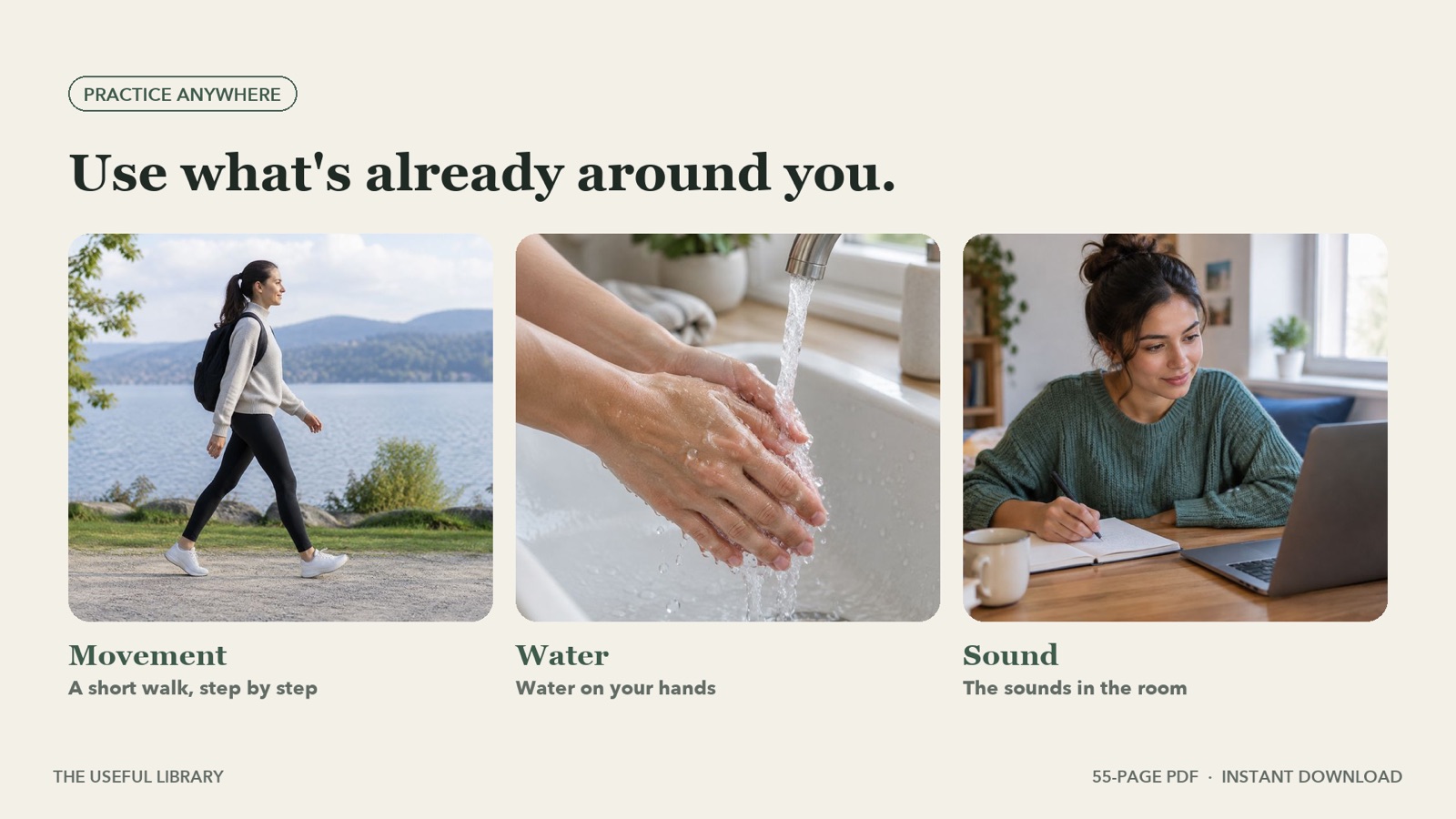
Pick a normal task you already do every day, like walking down the hall or washing your hands at the sink. No extra time on your calendar, no dark room.
Rest your focus on one physical feeling already happening: warm water on your skin, your feet pressing against the floor, the sounds around you. Racing thoughts settle without forcing your body to freeze.
Your thoughts will wander, and that is normal. A simple response guides your attention gently back to the anchor. You finish in five minutes and go right back to your day.
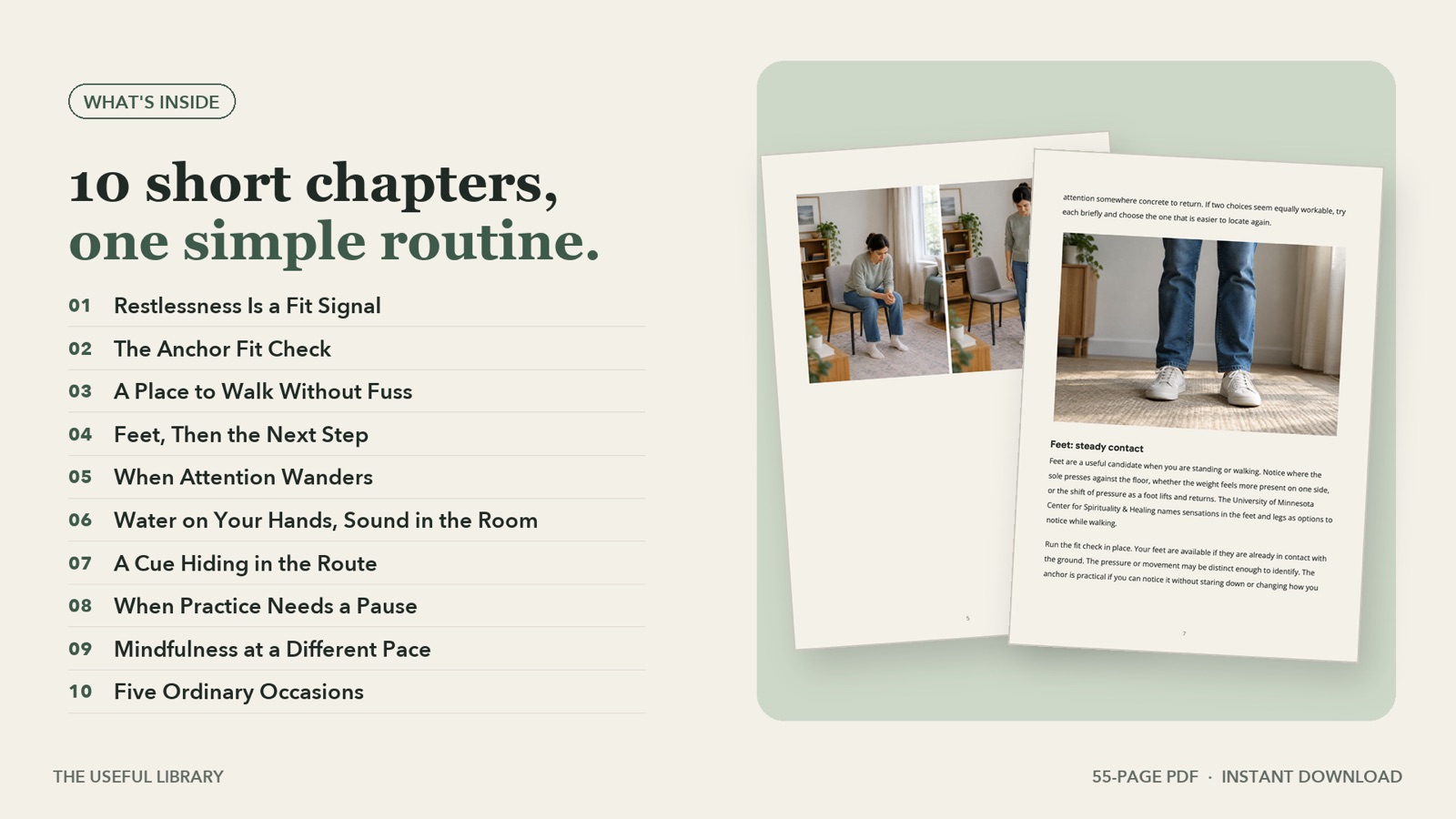
10 short chapters, one simple routine
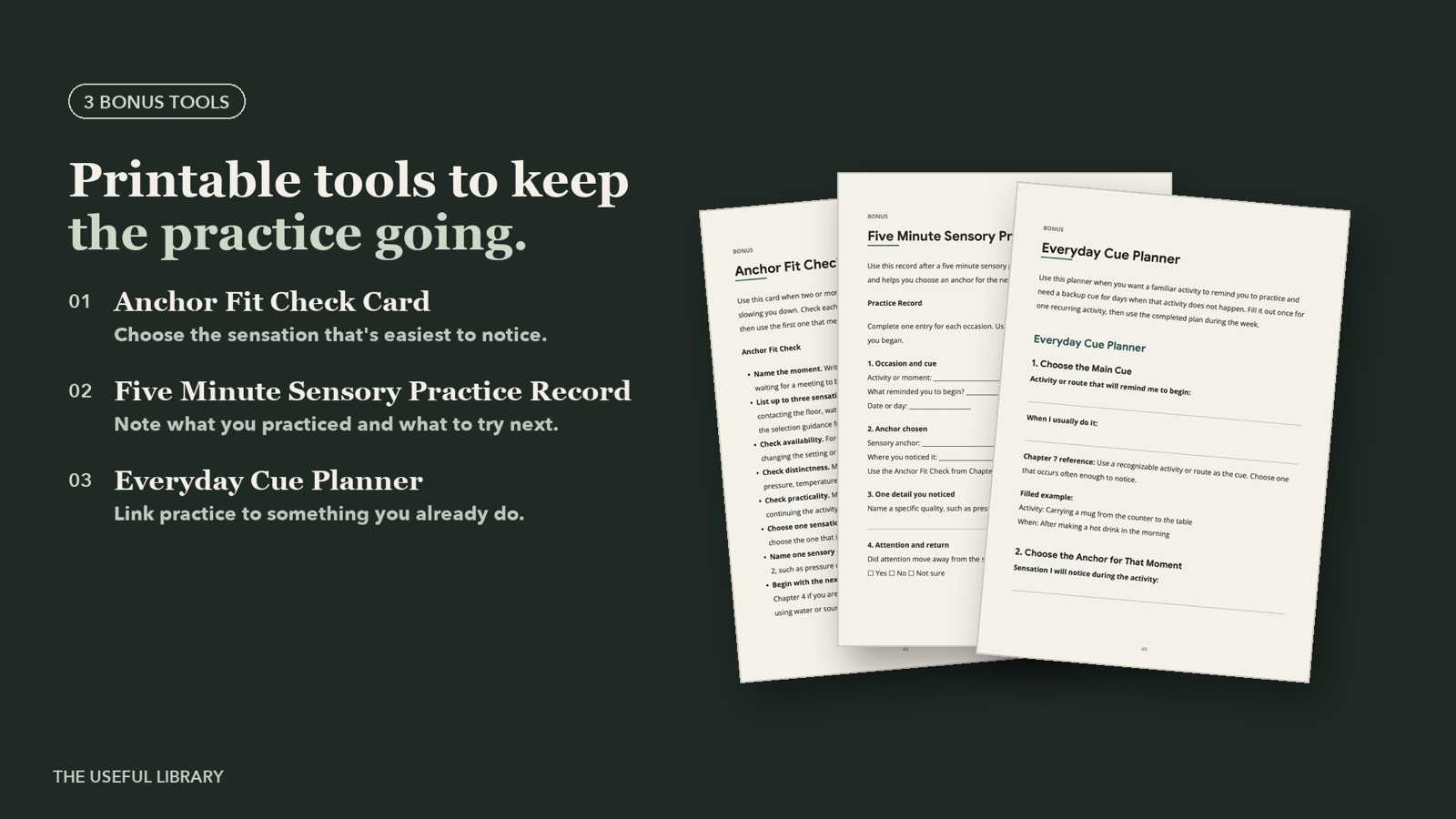
Anchor Fit Check Card, Practice Record and Everyday Cue Planner
You close this tab and wake up tomorrow to the same mental friction. Another seated meditation app, three days cross-legged, then quitting because your body refuses to freeze. Work stress follows you straight into the evening, and relaxing feels like one more chore.
A tough meeting ends and your shoulders are tight. You walk to the kitchen for a glass of water and anchor your attention on the cool water on your skin. Thoughts still chatter, but they no longer run the room. You head back with clearer focus and zero guilt, and get home with energy left for your family.
Instant download · Secure checkout by Whop
Download the guide, print your tools and try the seven-day plan during your normal week. If you cannot easily finish five five-minute sensory sessions while washing hands, walking or moving through your workday, you do not pay.
Send a brief email to support within 30 days of purchase and we will refund your entire payment, no questions asked. You can keep the files.
That restlessness is why seated meditation felt so hard. With kinetic sensory anchoring you never have to sit still or force your mind quiet. Movement and ordinary touch give a busy brain an active anchor to rest on.
Just five minutes, inside things you already do. Washing your hands, walking down a hallway or stepping outside for fresh air becomes your session. If you have five minutes to move, you have five minutes to practice.
Noticing that your mind wandered is the practice working. Brains are built to scan, plan and think. The book shows you how to gently return to your physical senses without self-blame.
Yes. You do not have to watch your breath. The practices use external contact points, like feet on the floor or water on your hands, which many people find easier.
No silent rooms, long timers or rigid streaks. You aim for five short sessions across seven days, with backup cues so a chaotic afternoon never ruins your progress.
Nothing is ruined. Five occasions across seven days leaves two days open on purpose. You pick right back up without starting over.
Instantly after checkout, as a PDF with the 7-day plan and three printable tools. Read it on any phone, tablet or computer.
You are covered by the 30-Day Everyday Practice Guarantee. If you cannot easily complete five practices during your regular week, email within 30 days for a full refund.
No. It is a practical self-help guide for everyday stress, not medical or psychological treatment. If stress or anxiety feels overwhelming, please talk to a qualified professional.
 The Useful Library